The silent facility
An automated briefing, backup power and an interrupted final recording. A heavy security door admits the team into the restricted complex.
THEATRICAL LANGUAGE / WEIGHT + ABSENCEA signal that should never have been received.
A facility that begins to answer.
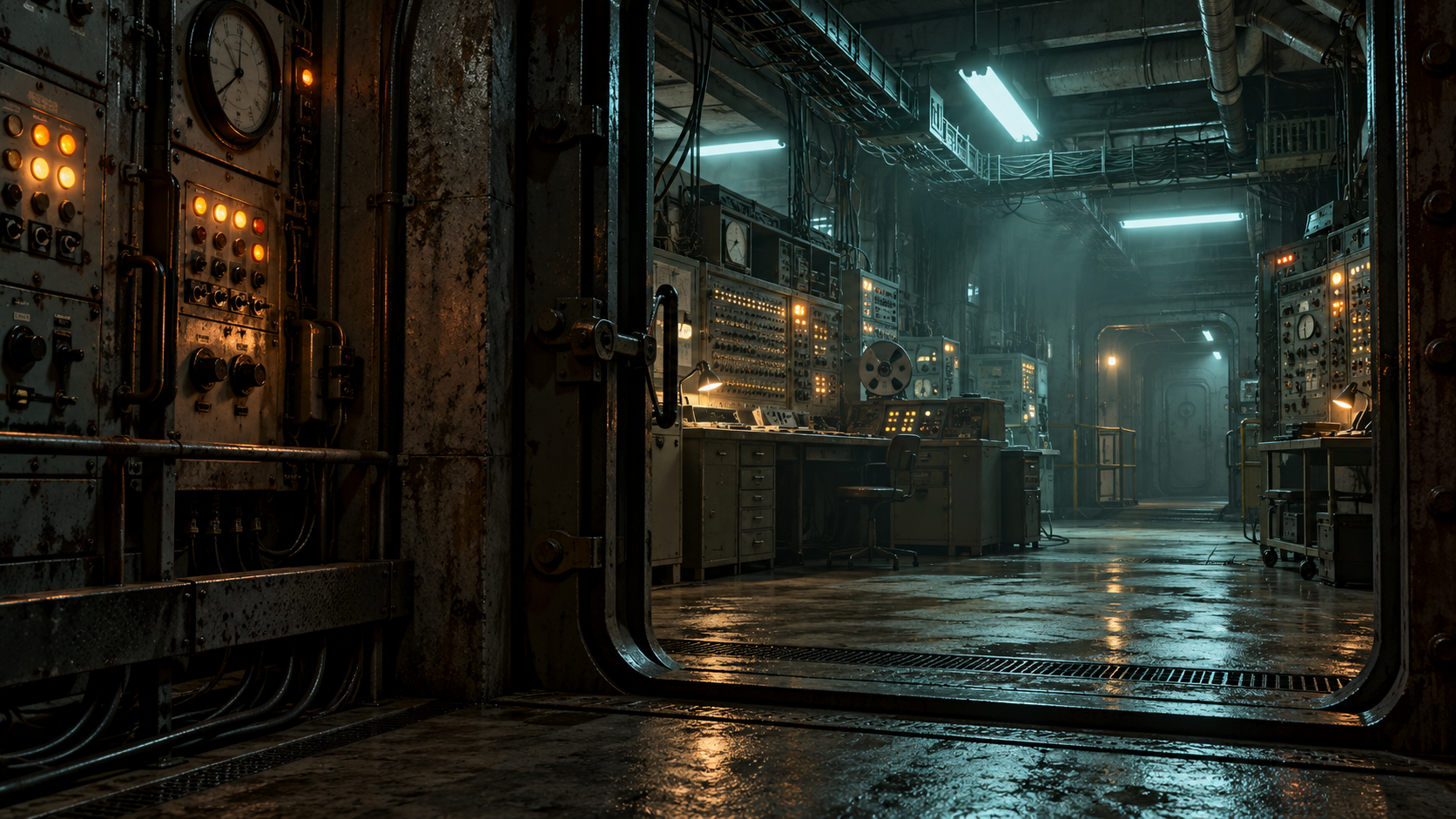
A 30–40-minute walkthrough experience inside an isolated research installation that has intercepted an unexplained signal from deep space. Guests arrive as a civilian technical assessment team investigating a communications failure. The researchers are missing. The systems are still running.
Restoring a transmission reveals something that responds to human observation. A voice repeats a word spoken in the room. A valve turns by itself. Sound follows the group through the walls. The infrastructure becomes an unknown intelligence's means of communication.
The illusion lives in physical scenery, mechanical effects, spatial audio, lighting and controlled environmental changes.
An automated briefing, backup power and an interrupted final recording. A heavy security door admits the team into the restricted complex.
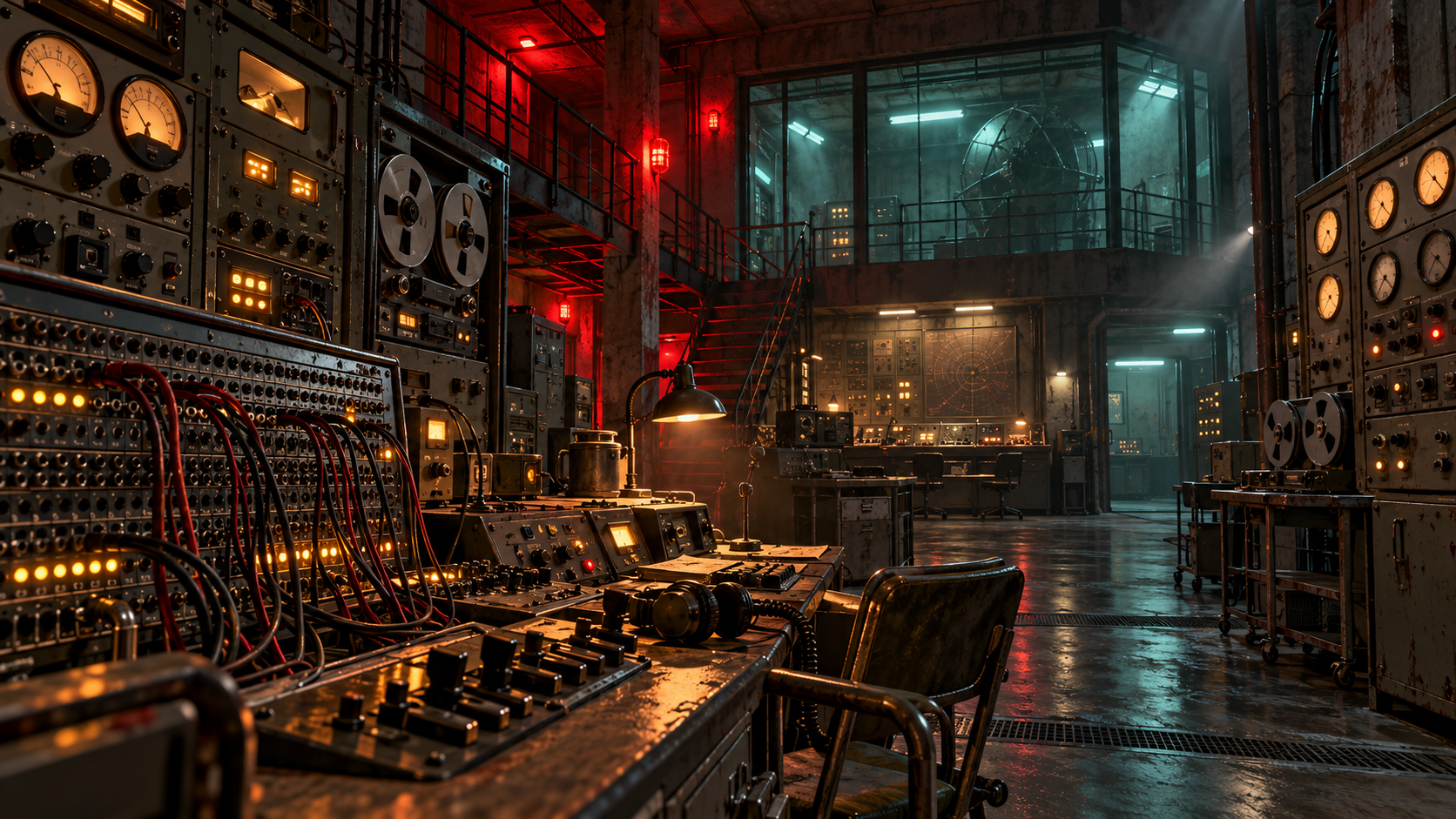
THEATRICAL LANGUAGE / WEIGHT + ABSENCEGuests work physical switches and patch panels to recover a fragmented transmission. A voice emerges, repeating something someone just said.
THEATRICAL LANGUAGE / TACTILE INPUT + VOICEGauges fluctuate, machinery moves and lights pulse. A sound travels through the walls as guests restore power to containment.
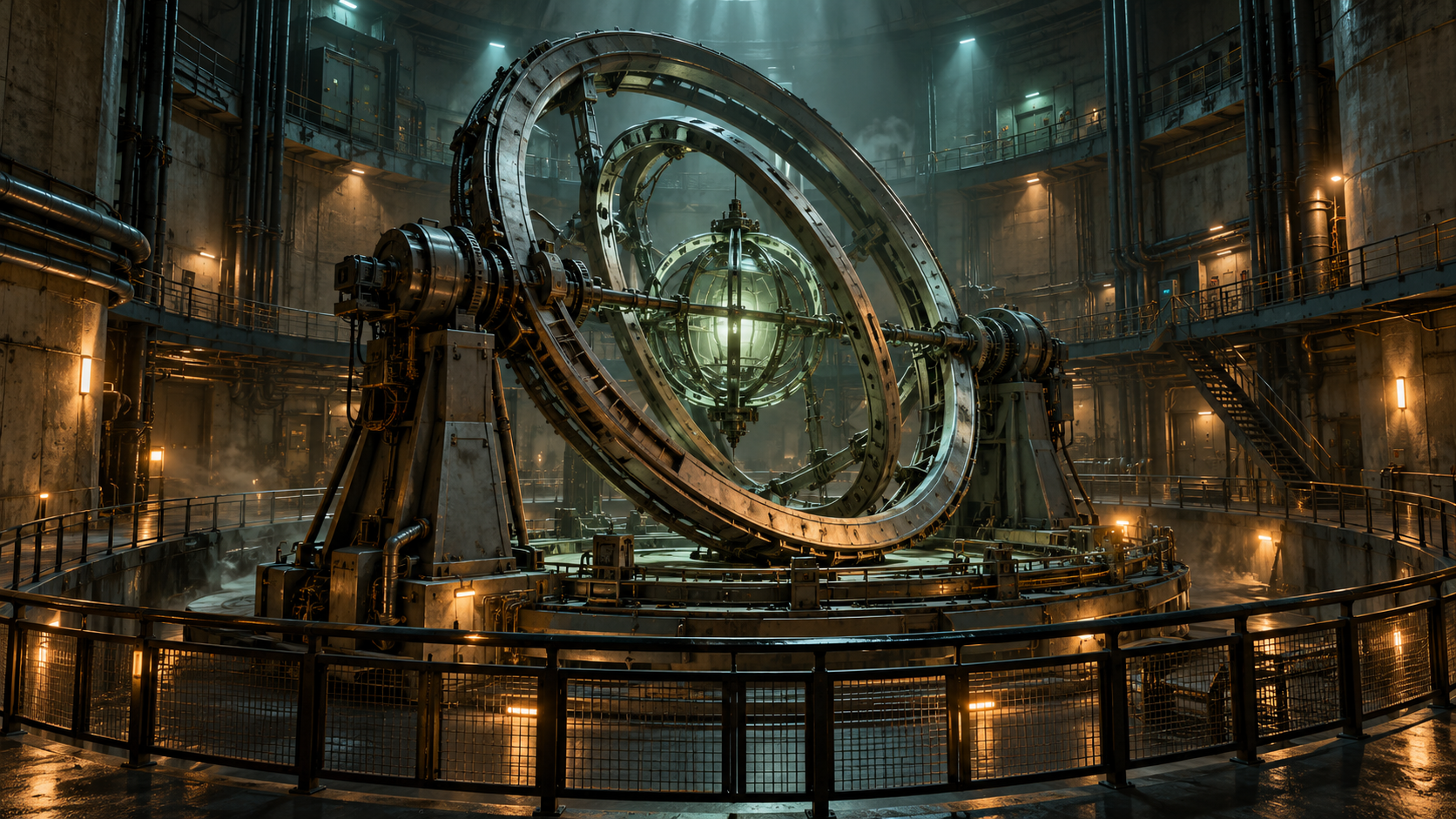
THEATRICAL LANGUAGE / MOTION + SPATIAL AUDIOConcentric rings move in an unsettling sequence. The apparatus responds to the group. The signal is using the facility to construct a physical presence.
THEATRICAL LANGUAGE / MECHANICAL TRANSFORMATIONContainment fails. Emergency shutdown drives the group toward evacuation. Outside, one final radio message suggests the signal has followed them.
THEATRICAL LANGUAGE / SHUTDOWN + AFTERIMAGEDoors have weight. Switches click. Equipment vibrates. Every scenic mechanism appears to serve a plausible operational purpose.
Abandoned workstations, handwritten notes and damaged instruments reveal the story through observation rather than lengthy exposition.
Exploration becomes responsibility. Guests progress from examining equipment to restoring power and influencing the facility's response.
The centerpiece is an articulated assembly of concentric rings and concealed moving components. At first, it reads as an instrument for analyzing electromagnetic signals. During the climax, rings rotate independently, elements reposition and internal light exposes previously hidden patterns.
Spatial audio and synchronized vibration turn a mechanical sequence into an apparent response to the audience. The reveal depends on a coordinated physical transformation.
Physical switches · buttons · pressure sensors · monitored controls
Narrative states · cue sequencing · operator supervision
Motorized panels, vibration and moving assemblies
Practical fixtures, emergency states and reveals
Localized voices, directional sound and structural effects
Theatrical haze, airflow and temperature cues
Interlocks · supervised motion · emergency overrides. The operator can select alternate cue sequences when an effect is unavailable.
Conceptual guest flow, not an architectural or life-safety plan. Separate staff and maintenance access, emergency egress and accessible alternatives would be developed with the layout.
Preliminary assumptions from the creative brief. Throughput at the target dispatch rate is theoretical; scene duration, occupancy, staffing, accessibility and reset requirements remain to be validated.
Durable modular scenery, quiet repeatable motion, inspection access and a documented reset process support live operation. Alternate cues should preserve the story when individual effects are unavailable. The concept could become a permanent attraction, a seasonal installation or a touring production.
The first prototype is a single laboratory control station. A guest operates physical controls; lighting, audio and a small mechanical effect respond in sequence. This tests whether a believable machine can feel like it is listening.
Scenic durability, repeatable motion, synchronization, guest pacing and maintainability would guide the larger design.
Narrative design, mechanical engineering, scenic fabrication and live production — working together to make a building feel alive.
Independent creative and technical concept study. The Last Transmission has not been built. AI-generated images communicate atmosphere and scenic intent; diagrams are conceptual. Suspended loads and motion systems would require qualified engineering and rigging design.